
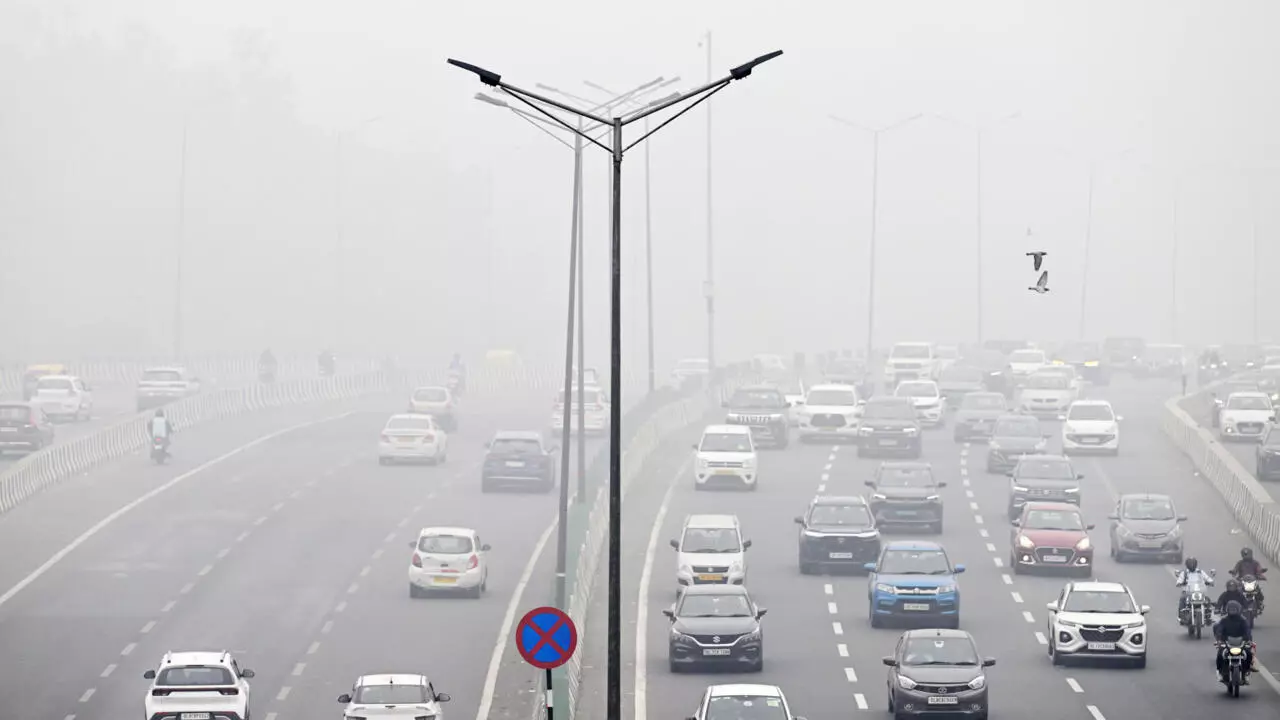
A thick layer of toxic smog blanketed India’s capital on Monday, with air pollution levels rising to more than 16 times the World Health Organization’s safe limit, as residents prepared to celebrate the Diwali festival.
Authorities attributed the sharp rise in pollution to a mix of crop burning, vehicle emissions, industrial smoke, and fireworks. Despite a court order allowing only “green firecrackers,” restrictions were widely ignored in previous years.
Levels of PM2.5 — fine particles that can enter the bloodstream — reached 248 micrograms per cubic meter in parts of Delhi, according to IQAir. Officials warned conditions could worsen in the coming days.
In a bid to ease the smog, city authorities plan to test cloud seeding by aircraft later this month to induce artificial rain. The government has also urged uninterrupted power supply to curb diesel generator use.
A study published in The Lancet Planetary Health estimated that air pollution contributed to 3.8 million deaths in India between 2009 and 2019.
Authorities attributed the sharp rise in pollution to a mix of crop burning, vehicle emissions, industrial smoke, and fireworks. Despite a court order allowing only “green firecrackers,” restrictions were widely ignored in previous years.
Levels of PM2.5 — fine particles that can enter the bloodstream — reached 248 micrograms per cubic meter in parts of Delhi, according to IQAir. Officials warned conditions could worsen in the coming days.
In a bid to ease the smog, city authorities plan to test cloud seeding by aircraft later this month to induce artificial rain. The government has also urged uninterrupted power supply to curb diesel generator use.
A study published in The Lancet Planetary Health estimated that air pollution contributed to 3.8 million deaths in India between 2009 and 2019.