

Malé, Maldives – October 4, 2025 – A peaceful protest led by the Maldivian Democratic Party (MDP) in Malé turned catastrophic last night, October 3, when Maldives Police Service deployed a Long-Range Acoustic Device (LRAD) sonic sound weapon and pepper spray against demonstrators, culminating in a violent arrest that left Mohamed Raslaan, Vice President of the MDP’s Hulhumalé Central Constituency, hospitalized with a heart attack. The rally, which demanded President Mohamed Muizzu’s resignation over allegations of corruption and democratic backsliding, has sparked widespread outrage and calls for international investigations into the use of sonic sound weapons and excessive force against civilians.
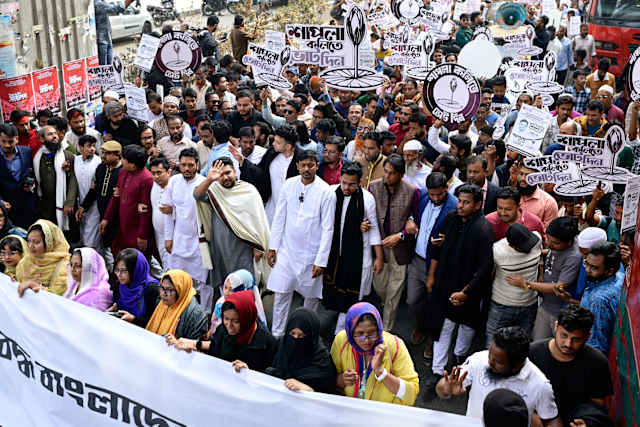
The protest began at the artificial beach on the eastern end of Majeedhee Magu, where thousands gathered under the leadership of MDP President Abdulla Shahid, MDP Chairperson Fayyaz Ismail, and former President Ibrahim Mohamed Solih. Adhaalath Party Leader Imran Abdulla was among other prominent figures who joined the demonstration. Chanting for accountability and Muizzu’s ouster, the protesters transitioned into a walking protest, moving westward along Majeedhee Magu, Malé’s bustling commercial artery. Police barricades halted their progress, confining the crowd in a tight urban corridor. Witnesses, reported a sudden, deafening blast from an LRAD sonic sound weapon—emitting sounds exceeding 150 decibels—causing disorientation, panic, and widespread ear pain, followed by the deployment of pepper spray and riot shields.
Mohamed Raslaan, 47, was among eight arrested during the escalation. Eyewitness accounts from bystanders describe Raslaan being doused with pepper spray at close range before being physically attacked and dragged during his arrest, after which he collapsed, suffering a cardiac arrest. Rushed to Indira Gandhi Memorial Hospital (IGMH), Raslaan remains in critical condition in the intensive care unit. Medical experts warn that the extreme stress from pepper spray—known to irritate airways and spike heart rate—combined with the physical assault and LRAD-induced disorientation, poses severe risks, especially in confined urban settings like Majeedhee Magu.
The Maldives Police Service defended their actions, claiming protesters threw objects and attempted to seize equipment, deeming the rally “unauthorized.” However, accounts from journalists, MDP supporters, and bystanders assert the demonstration was peaceful until police blockades trapped the crowd, followed by signal jamming to suppress footage, the LRAD’s deployment, and the use of pepper spray and riot gear. No significant protester violence was reported prior to the police response. The MDP issued a statement condemning the “brutal use of excessive force” and the “violent assault on the public,” demanding the unconditional release of all detainees.
“This was an attack on our right to demand change,” an MDP spokesperson said outside IGMH, where party leaders, including Shahid and Ismail, rallied around Raslaan’s family. “Using sonic sound weapons, pepper spray, and physical violence in Malé’s crowded streets endangers everyone—protesters, residents, children. It’s a betrayal of our democracy.”
The LRAD’s use marks a disturbing first for the Maldives, echoing controversial deployments in global protests like Pittsburgh’s G20 (2009) and Hong Kong’s pro-democracy marches (2019). Experts highlight risks of permanent hearing damage and psychological trauma, amplified in Malé’s concrete echo chamber. The Human Rights Commission of the Maldives (HRCM) has distanced itself from oversight, raising fears of impunity.
MDP leaders are demanding the immediate release of the detainees, a ban on sonic sound weapons in civilian contexts, and an independent probe, potentially by the UN or HRCM. Allegations of signal jamming and restricted media access have fueled accusations of a government cover-up, amplifying concerns about press freedom in a nation under scrutiny.
The brutal crackdown has galvanized a growing movement against President Muizzu’s administration, with thousands across Malé and beyond vowing to intensify protests until he steps down. From social media to the streets, outrage over the use of sonic sound weapons and violent arrests is uniting Maldivians in a renewed push for democratic reform, with appeals mounting for Amnesty International, Human Rights Watch, and the Commonwealth Secretariat to investigate the government’s tactics.
From the artificial beach to Majeedhee Magu’s choked streets, Malé’s spirit of resistance burns brighter than ever. The cries for justice—against Muizzu’s leadership and the police’s sonic and physical assaults—echo across the atolls, signaling a nation’s refusal to be silenced. The Maldives stands at a crossroads, demanding not just accountability but a future free from repression.
The protest began at the artificial beach on the eastern end of Majeedhee Magu, where thousands gathered under the leadership of MDP President Abdulla Shahid, MDP Chairperson Fayyaz Ismail, and former President Ibrahim Mohamed Solih. Adhaalath Party Leader Imran Abdulla was among other prominent figures who joined the demonstration. Chanting for accountability and Muizzu’s ouster, the protesters transitioned into a walking protest, moving westward along Majeedhee Magu, Malé’s bustling commercial artery. Police barricades halted their progress, confining the crowd in a tight urban corridor. Witnesses, reported a sudden, deafening blast from an LRAD sonic sound weapon—emitting sounds exceeding 150 decibels—causing disorientation, panic, and widespread ear pain, followed by the deployment of pepper spray and riot shields.
Mohamed Raslaan, 47, was among eight arrested during the escalation. Eyewitness accounts from bystanders describe Raslaan being doused with pepper spray at close range before being physically attacked and dragged during his arrest, after which he collapsed, suffering a cardiac arrest. Rushed to Indira Gandhi Memorial Hospital (IGMH), Raslaan remains in critical condition in the intensive care unit. Medical experts warn that the extreme stress from pepper spray—known to irritate airways and spike heart rate—combined with the physical assault and LRAD-induced disorientation, poses severe risks, especially in confined urban settings like Majeedhee Magu.
The Maldives Police Service defended their actions, claiming protesters threw objects and attempted to seize equipment, deeming the rally “unauthorized.” However, accounts from journalists, MDP supporters, and bystanders assert the demonstration was peaceful until police blockades trapped the crowd, followed by signal jamming to suppress footage, the LRAD’s deployment, and the use of pepper spray and riot gear. No significant protester violence was reported prior to the police response. The MDP issued a statement condemning the “brutal use of excessive force” and the “violent assault on the public,” demanding the unconditional release of all detainees.
“This was an attack on our right to demand change,” an MDP spokesperson said outside IGMH, where party leaders, including Shahid and Ismail, rallied around Raslaan’s family. “Using sonic sound weapons, pepper spray, and physical violence in Malé’s crowded streets endangers everyone—protesters, residents, children. It’s a betrayal of our democracy.”
The LRAD’s use marks a disturbing first for the Maldives, echoing controversial deployments in global protests like Pittsburgh’s G20 (2009) and Hong Kong’s pro-democracy marches (2019). Experts highlight risks of permanent hearing damage and psychological trauma, amplified in Malé’s concrete echo chamber. The Human Rights Commission of the Maldives (HRCM) has distanced itself from oversight, raising fears of impunity.
MDP leaders are demanding the immediate release of the detainees, a ban on sonic sound weapons in civilian contexts, and an independent probe, potentially by the UN or HRCM. Allegations of signal jamming and restricted media access have fueled accusations of a government cover-up, amplifying concerns about press freedom in a nation under scrutiny.
The brutal crackdown has galvanized a growing movement against President Muizzu’s administration, with thousands across Malé and beyond vowing to intensify protests until he steps down. From social media to the streets, outrage over the use of sonic sound weapons and violent arrests is uniting Maldivians in a renewed push for democratic reform, with appeals mounting for Amnesty International, Human Rights Watch, and the Commonwealth Secretariat to investigate the government’s tactics.
From the artificial beach to Majeedhee Magu’s choked streets, Malé’s spirit of resistance burns brighter than ever. The cries for justice—against Muizzu’s leadership and the police’s sonic and physical assaults—echo across the atolls, signaling a nation’s refusal to be silenced. The Maldives stands at a crossroads, demanding not just accountability but a future free from repression.