
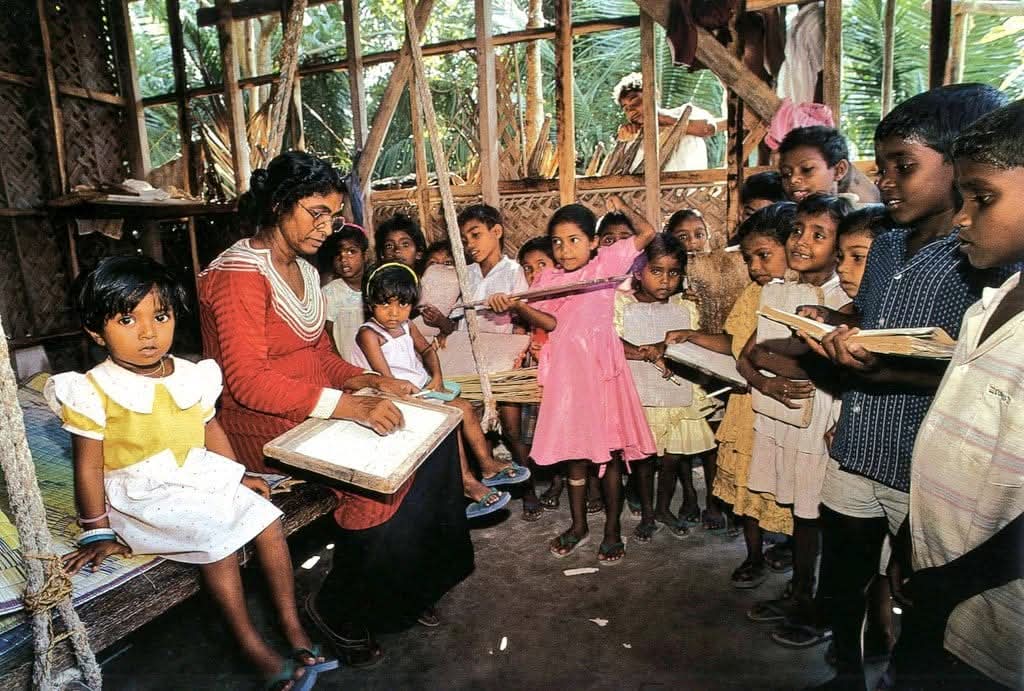
In the Maldives, the Edhuruge, meaning "Teacher’s House," was once the cornerstone of traditional education. These private homes, led by local teachers known as Edhurube (male) or Edhurudhaetha (female), served as schools where children as young as three learned to read and write Arabic, Thaana script, and the Qur’an, alongside basic Islamic studies. Some Edhurus also taught gender-specific life skills, enriching the cultural education of young Maldivians.
The learning process began with the Arabic alphabet, taught using a sand board called Vorhufilaa. Children progressed to writing on a filaa, a unique wooden board, using pencils and erasable clay. Once proficient, they advanced to reading from the mushaf (Qur’an book). Milestones like completing the Qur’an, starting Juz Amma, or reciting Surah Yasin were celebrated with ritualistic feasts and prayers, marking significant moments in a child’s journey.
With the rise of modern schools, Edhuruges transformed into Qur’an schools, attended before or after regular classes. However, these traditional institutions have largely faded, replaced by modern Qur’an classes with contemporary methods. The Edhuruge remains a cherished part of Maldivian heritage, a testament to the community’s commitment to education and faith.
The learning process began with the Arabic alphabet, taught using a sand board called Vorhufilaa. Children progressed to writing on a filaa, a unique wooden board, using pencils and erasable clay. Once proficient, they advanced to reading from the mushaf (Qur’an book). Milestones like completing the Qur’an, starting Juz Amma, or reciting Surah Yasin were celebrated with ritualistic feasts and prayers, marking significant moments in a child’s journey.
With the rise of modern schools, Edhuruges transformed into Qur’an schools, attended before or after regular classes. However, these traditional institutions have largely faded, replaced by modern Qur’an classes with contemporary methods. The Edhuruge remains a cherished part of Maldivian heritage, a testament to the community’s commitment to education and faith.