
In the days when Maradhoo’s shores echoed with Buddhist chants, a fierce storm tore through the Indian Ocean, smashing an Arabian ship from Yemen against the island’s coral reefs. From the wreckage emerged Qadir, a scholar of Islam whose calm presence seemed to hush the raging waves. The islanders, steeped in ancient stupa rituals, named the islet where the ship splintered 'Nau urunu Hajara'—Hajara, the place of the wrecked ship. Hajara might have been named by Qadir, as it is a name of Arabic origin.
Qadir settled among Maradhoo’s swaying palms, his voice weaving tales of one God, of mercy and devotion. The people, drawn to his quiet conviction, began to embrace Islam. Near his home, he built a small coral-stone mosque. They called it Hirigau Mosque, a beacon of Maradhoo’s transformation. But not all welcomed change. Across the lagoon, the Buddhists of Gan clung to their traditions, and tensions erupted into battle. Qadir, revered as Qadiri Kaleygefaanu, led his followers to the tiny islet of Sawaahili, its name echoing Arabic influence. Under a moonlit sky, swords clashed, and the sands bore the weight of that night. In the 1970s, islanders uncovered bones scattered across Sawaahili and along Maradhoo’s coast, relics of that fateful struggle.
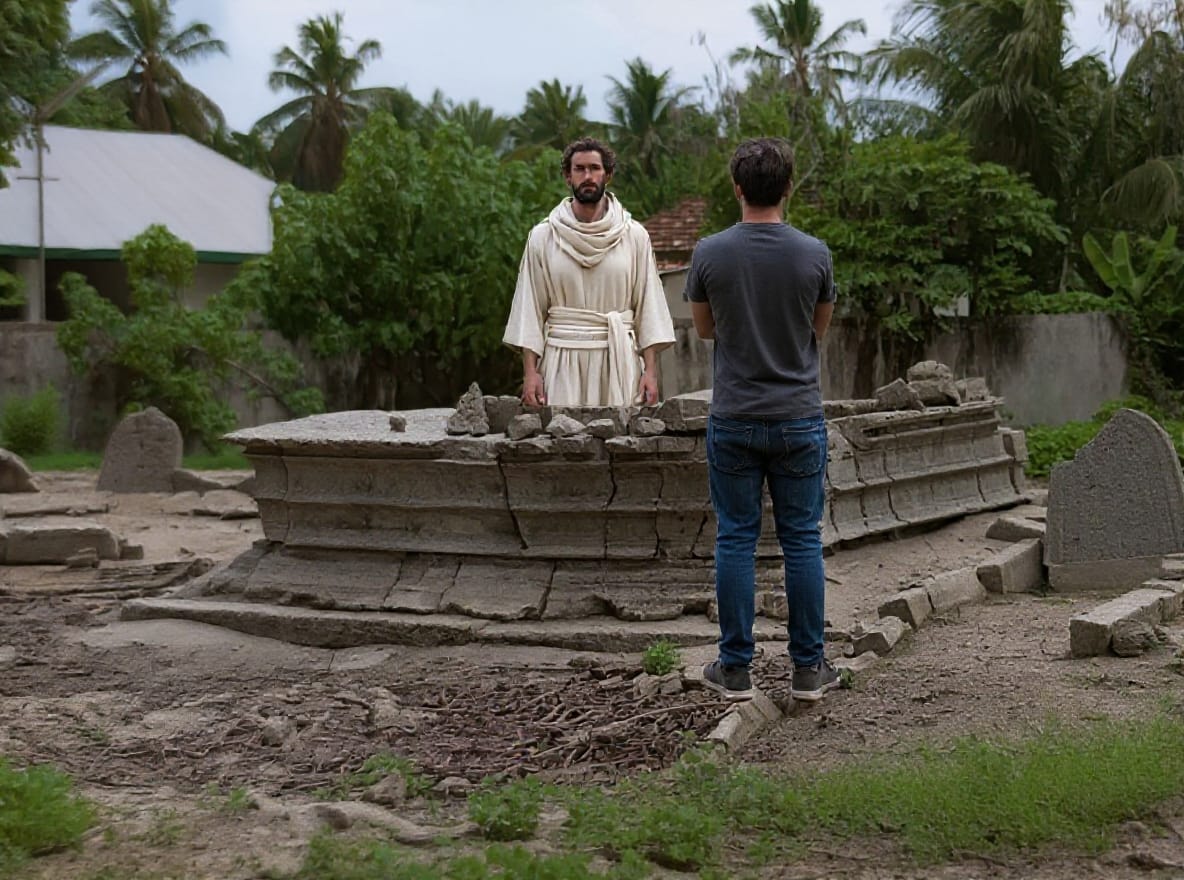
Maradhoo turned to Islam, and Qadir’s influence deepened. Seven sons of a Kan’boa from Gan came to study under him, living and dying in Maradhoo, their graves near the Dhan’ḍivara Mosque, where Qadir’s wife, Aihairani, rested. Her tombstone, like his, was a masterpiece of carved patterns, swirling with the elegance of the sea. Qadir’s shrine stood in the graveyard of his Hirigau Mosque, though by 2025, the graveyard lay in ruins, its stones cracked and overgrown with weeds, its legacy fading from memory. The mosque, decommissioned by the government in the 1970s, was dismantled, its coral blocks carted away.
In a private room, hidden within the house of Mudinbiyaage Jamalbeybey, a well attributed to Qadir still flowed. It was famed for a miracle: when Aihairani despaired over a lack of tuna—the heart of every Maldivian kitchen—Qadir went to the well, whispered a prayer, and drew up a gleaming tuna, its skin flashing like silver in the sun. The story, like the well, was now tucked away, known only to a few.
On a warm evening in August 2025, sixteen-year-old Suneeth sat on the veranda of his great-grandfather’s house in Maradhoo, his sandals tapping lightly on the cemented floor. His great-grandfather, Muhon’dho Beyyaa, a frail man with eyes that held the wisdom of decades, leaned forward, his voice low but vibrant. “Kaloa, you must know of Qadiri Kaleygefaanu,” he began, recounting the tale of the scholar who brought Islam to their island. He spoke of the wrecked ship, the coral mosque, the battle on Sawaahili, and the miraculous tuna from the well. Suneeth listened, his eyes wide, his heart racing with every detail. “He was Easa Qadir, they say,” Muhon’dho Beyyaa added, “father to Yusuf Naib, who spread Islam to Meedhoo. But here in Maradhoo, his story is slipping away.”
Suneeth, a youth with a sharp mind and a passion for history, felt a spark ignite. “Why don’t people talk about him, Bon’do Bappaa?” he asked. “His shrine’s crumbling, the mosque is gone—how can we forget someone who changed everything?” Muhon’dho Beyyaa sighed, his gaze distant. “Time buries even the greatest tales, Kaloa. The graveyard’s a ruin, the well’s locked away in someone’s house. But you—you could bring his story back.”
That night, Suneeth couldn’t sleep. He saw Qadir standing on the reef, his robes billowing, teaching under the palms. He imagined the Hirigau Mosque, its carved walls glowing in the dawn. The thought that Qadiri Kaleygefaanu’s legacy was fading stung him. He wanted Maradhoo to remember, to honour the man who shaped their faith. The next day, wearing his favorite sneakers, Suneeth visited the ruined graveyard. He brushed aside vines, tracing the weathered patterns on Qadir’s tombstone, their curves still elegant despite the cracks. “You deserve to be known,” he whispered.
Suneeth began his mission. He gathered friends at school, sharing his great-grandfather’s stories, his voice alive with excitement. He sketched the tombstones’ patterns, posted them online, and wrote about Qadir’s miracles and battles. He pleaded with the elders to open the well’s room for visitors, to let its story breathe again. “We could rebuild the graveyard,” he told his classmates, “make a sign, tell tourists about Qadiri Kaleygefaanu!” Some laughed, but others joined him, inspired by his fire.
One evening, Suneeth returned to Muhon’dho Beyyaa. “I want everyone to know Qadir’s name again,” he said, his eyes bright. Muhon’dho Beyyaa smiled, placing a trembling hand on his shoulder. “You’re doing what he did, Kaloa—bringing light to Maradhoo.” As the stars rose over the island, Suneeth felt Qadir’s spirit in the breeze, urging him on, a youth determined to revive a forgotten hero and weave his story back into the heart of Maradhoo.
Qadir settled among Maradhoo’s swaying palms, his voice weaving tales of one God, of mercy and devotion. The people, drawn to his quiet conviction, began to embrace Islam. Near his home, he built a small coral-stone mosque. They called it Hirigau Mosque, a beacon of Maradhoo’s transformation. But not all welcomed change. Across the lagoon, the Buddhists of Gan clung to their traditions, and tensions erupted into battle. Qadir, revered as Qadiri Kaleygefaanu, led his followers to the tiny islet of Sawaahili, its name echoing Arabic influence. Under a moonlit sky, swords clashed, and the sands bore the weight of that night. In the 1970s, islanders uncovered bones scattered across Sawaahili and along Maradhoo’s coast, relics of that fateful struggle.
Maradhoo turned to Islam, and Qadir’s influence deepened. Seven sons of a Kan’boa from Gan came to study under him, living and dying in Maradhoo, their graves near the Dhan’ḍivara Mosque, where Qadir’s wife, Aihairani, rested. Her tombstone, like his, was a masterpiece of carved patterns, swirling with the elegance of the sea. Qadir’s shrine stood in the graveyard of his Hirigau Mosque, though by 2025, the graveyard lay in ruins, its stones cracked and overgrown with weeds, its legacy fading from memory. The mosque, decommissioned by the government in the 1970s, was dismantled, its coral blocks carted away.
In a private room, hidden within the house of Mudinbiyaage Jamalbeybey, a well attributed to Qadir still flowed. It was famed for a miracle: when Aihairani despaired over a lack of tuna—the heart of every Maldivian kitchen—Qadir went to the well, whispered a prayer, and drew up a gleaming tuna, its skin flashing like silver in the sun. The story, like the well, was now tucked away, known only to a few.
On a warm evening in August 2025, sixteen-year-old Suneeth sat on the veranda of his great-grandfather’s house in Maradhoo, his sandals tapping lightly on the cemented floor. His great-grandfather, Muhon’dho Beyyaa, a frail man with eyes that held the wisdom of decades, leaned forward, his voice low but vibrant. “Kaloa, you must know of Qadiri Kaleygefaanu,” he began, recounting the tale of the scholar who brought Islam to their island. He spoke of the wrecked ship, the coral mosque, the battle on Sawaahili, and the miraculous tuna from the well. Suneeth listened, his eyes wide, his heart racing with every detail. “He was Easa Qadir, they say,” Muhon’dho Beyyaa added, “father to Yusuf Naib, who spread Islam to Meedhoo. But here in Maradhoo, his story is slipping away.”
Suneeth, a youth with a sharp mind and a passion for history, felt a spark ignite. “Why don’t people talk about him, Bon’do Bappaa?” he asked. “His shrine’s crumbling, the mosque is gone—how can we forget someone who changed everything?” Muhon’dho Beyyaa sighed, his gaze distant. “Time buries even the greatest tales, Kaloa. The graveyard’s a ruin, the well’s locked away in someone’s house. But you—you could bring his story back.”
That night, Suneeth couldn’t sleep. He saw Qadir standing on the reef, his robes billowing, teaching under the palms. He imagined the Hirigau Mosque, its carved walls glowing in the dawn. The thought that Qadiri Kaleygefaanu’s legacy was fading stung him. He wanted Maradhoo to remember, to honour the man who shaped their faith. The next day, wearing his favorite sneakers, Suneeth visited the ruined graveyard. He brushed aside vines, tracing the weathered patterns on Qadir’s tombstone, their curves still elegant despite the cracks. “You deserve to be known,” he whispered.
Suneeth began his mission. He gathered friends at school, sharing his great-grandfather’s stories, his voice alive with excitement. He sketched the tombstones’ patterns, posted them online, and wrote about Qadir’s miracles and battles. He pleaded with the elders to open the well’s room for visitors, to let its story breathe again. “We could rebuild the graveyard,” he told his classmates, “make a sign, tell tourists about Qadiri Kaleygefaanu!” Some laughed, but others joined him, inspired by his fire.
One evening, Suneeth returned to Muhon’dho Beyyaa. “I want everyone to know Qadir’s name again,” he said, his eyes bright. Muhon’dho Beyyaa smiled, placing a trembling hand on his shoulder. “You’re doing what he did, Kaloa—bringing light to Maradhoo.” As the stars rose over the island, Suneeth felt Qadir’s spirit in the breeze, urging him on, a youth determined to revive a forgotten hero and weave his story back into the heart of Maradhoo.